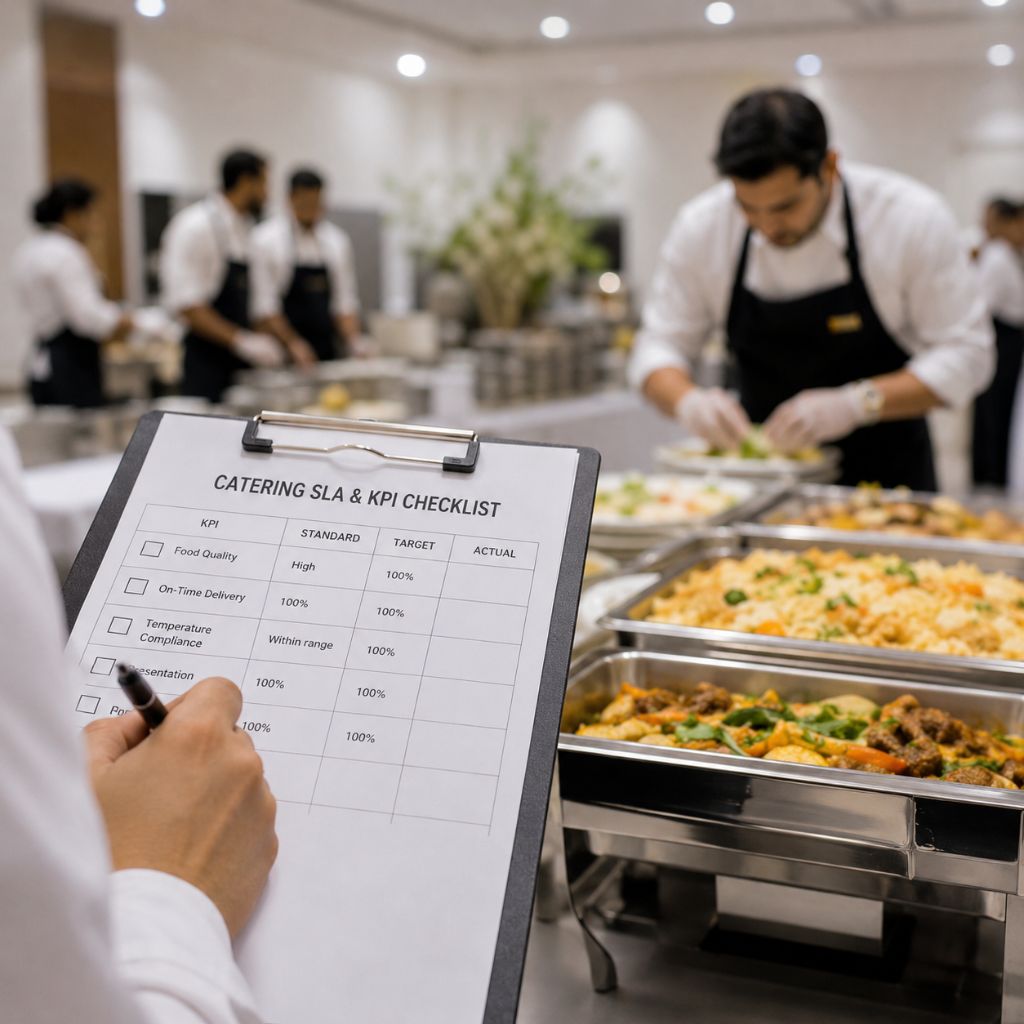
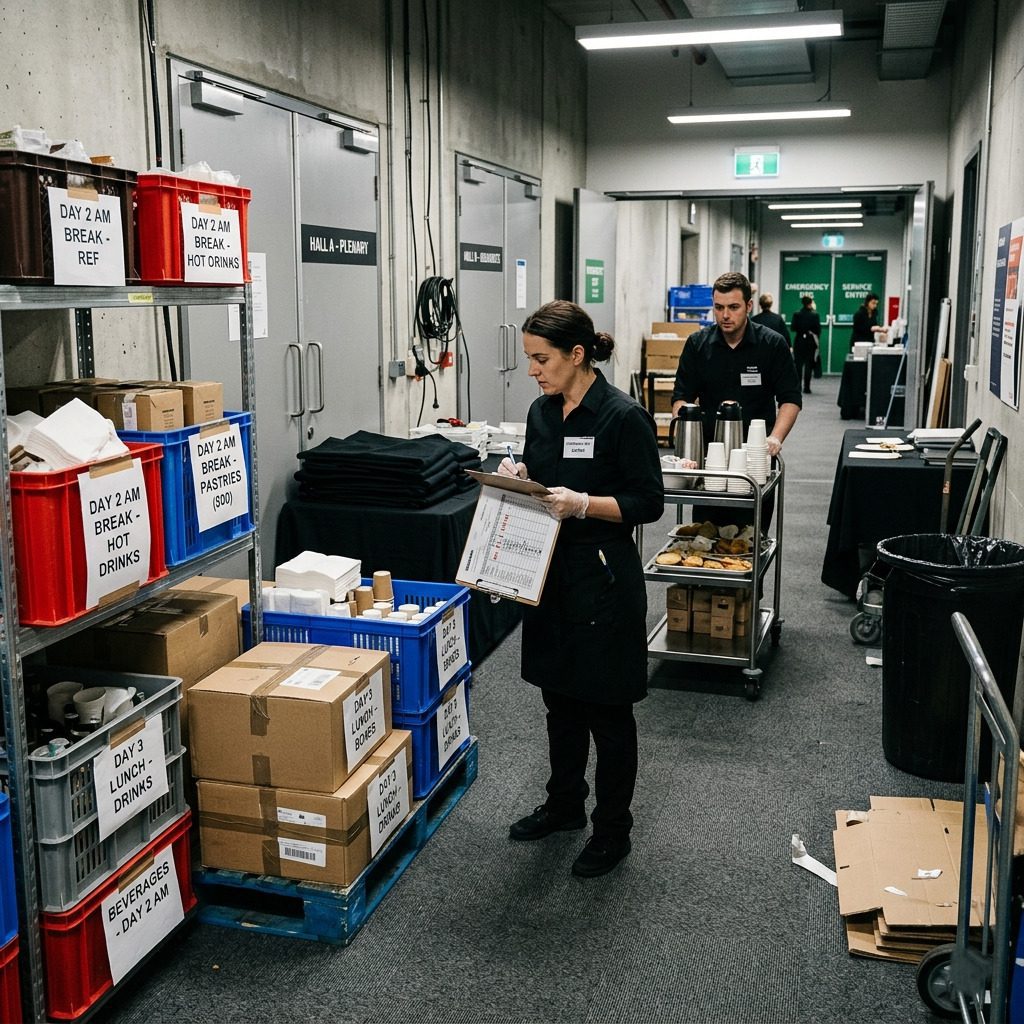
There’s a moment in every long-term catering contract where the complaints start. Usually around week six or seven. The food is fine. It’s the same quality as week one. But something has changed in how people feel about it. They’ve eaten the chicken machboos three times. The pasta station feels repetitive. Someone says “we always have the same thing” even though the menu technically rotates.
Menu fatigue is real, and it’s the number one complaint in long-running staff meal programmes. Not food quality. Not portion size. Not delivery timing. Just boredom. And fixing it isn’t about adding more dishes — it’s about designing a rotation system that’s smarter than just shuffling the same 15 recipes around in a different order every month.
What a rotation cycle actually looks like at 500+ meals per day
When you’re feeding a dozen people, you can wing it. When you’re feeding 500, you can’t. Every meal needs to be planned, costed, sourced, prepared, and delivered according to a schedule that production and logistics teams rely on. Spontaneity at this scale means chaos.
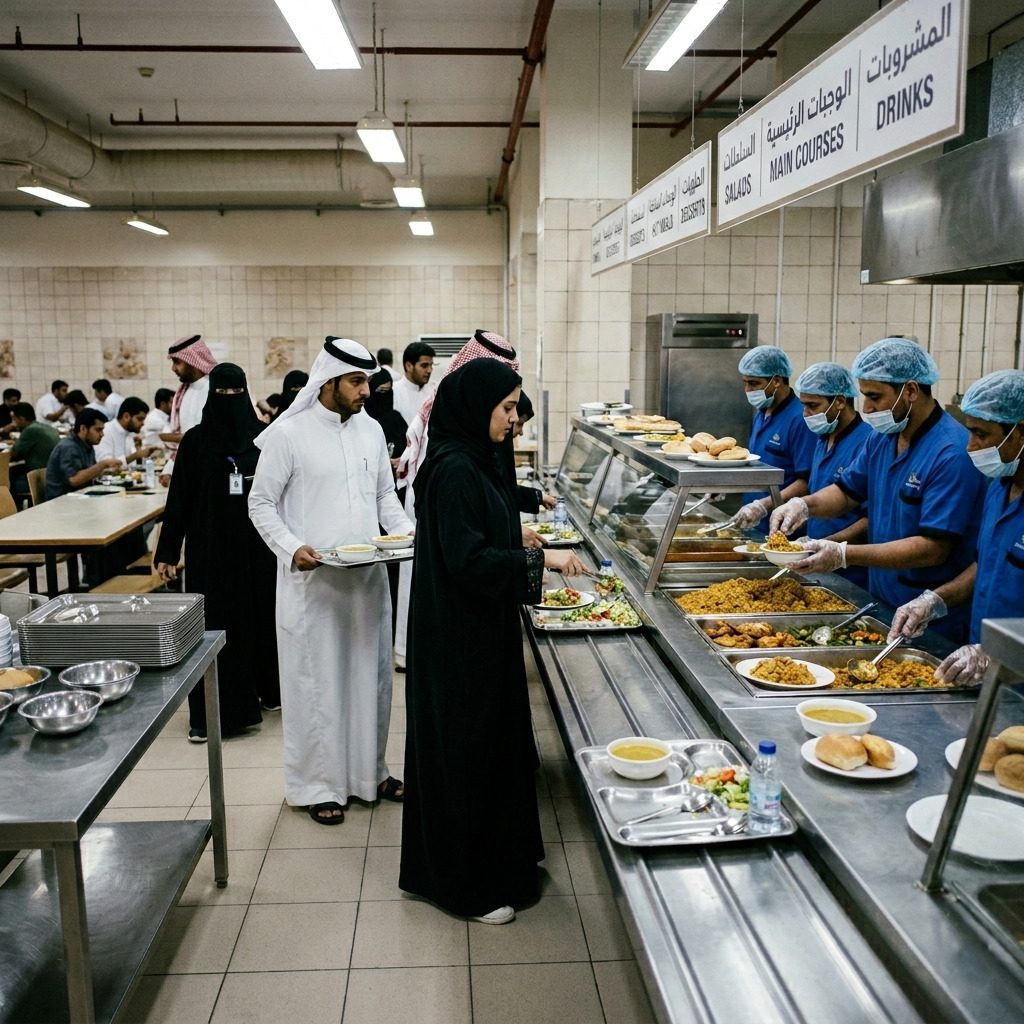
We run 4-week rotation cycles as our standard baseline. That means 20 unique lunch menus before anything repeats. Within each day’s menu, there are typically three to four main dish options, a soup, a salad bar or cold option, and a dessert or fruit selection. Multiply that across 20 days and you’re looking at 60 to 80 individual dishes per cycle.
But here’s what most people don’t realise: the 4-week cycle is the floor, not the ceiling. The cycle only works if it evolves. We revise our rotation every quarter based on consumption data — not what people say they want, but what they actually ate. There’s a consistent gap between what employees request and what they consume, and if you plan menus based on suggestion box responses alone, you’ll end up with a lot of quinoa salad going into the bin.
Balancing Saudi and international cuisines
This is where menu planning for Riyadh gets specific. Most large offices in the city have a workforce that includes Saudi nationals, Gulf Arab expats, South Asian employees, Southeast Asian staff, and Western professionals. Designing a menu that satisfies everyone is genuinely hard.
The temptation is to default to the lowest common denominator — safe international dishes that offend nobody but excite nobody either. Plain grilled chicken. Steamed rice. A green salad. That’s not a menu. That’s a hospital tray.
What actually works is cultural cycling within the rotation. Monday’s menu leans Saudi — kabsa, jareesh, mathlooba. Tuesday goes South Asian — biryani, dal, roti. Wednesday is Mediterranean or Western. Thursday might be a mixed international day. Friday (where applicable) is lighter or fusion. Each day has a clear culinary identity, and over the course of a week, every major dietary culture in the office gets represented.
The dishes themselves need to be executed well. A mediocre biryani doesn’t count as representing South Asian cuisine. It counts as an insult. If your caterer doesn’t have cooks who can prepare dishes from multiple culinary traditions with competence — not just vague approximation — the cultural rotation won’t work.
Dietary accommodation at scale isn’t a side note
In a 500-person office, you’ll have employees who are diabetic, vegetarian, vegan, gluten-intolerant, lactose-intolerant, allergic to nuts, allergic to shellfish, and observing various dietary restrictions tied to religious practice. That’s not unusual. That’s normal.
Managing this at scale requires a system, not good intentions. Here’s how we handle it:
Halal is the baseline. Every item in our production facility is halal-compliant. This isn’t an option or a modification — it’s the default standard.
Vegetarian and vegan options are part of the daily menu, not a separate request. There should always be at least one substantial vegetarian main dish available as a regular menu item, not a side thought. Employees who don’t eat meat shouldn’t have to feel like they’re eating the garnish while everyone else gets the main course.
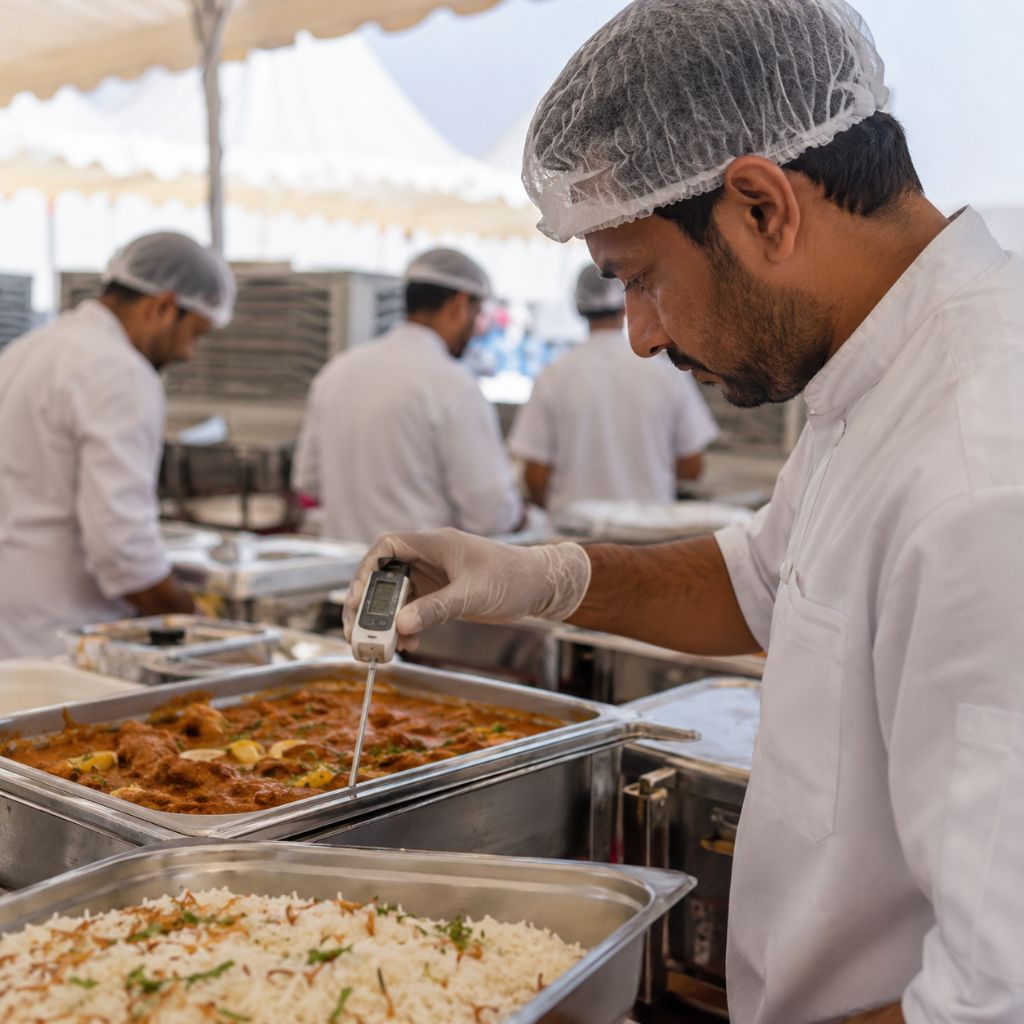
Allergen management is procedural. Dishes containing the eight major allergens (milk, eggs, fish, shellfish, tree nuts, peanuts, wheat, soya) are identified and labelled. Preparation happens with segregated equipment where cross-contamination risk exists. Staff are trained on allergen protocols, not just told to “be careful.”
Individual dietary requirements — a specific employee with Crohn’s disease, another with a post-surgical dietary restriction — get documented in our system and accommodated through modified portions from the daily menu or, where necessary, dedicated preparations. The account manager tracks these. They don’t rely on the employee reminding the serving staff every day.
Seasonal menus matter more than people think
Nobody wants a heavy lamb stew in August. And nobody wants a cold pasta salad in January when it’s 12°C outside (yes, Riyadh does get cold — or at least cold by Riyadh standards). Seasonal adjustment isn’t gourmet pretension. It’s common sense applied to what people actually want to eat at different times of the year.
From a procurement perspective, seasonal menus also make financial sense. Ingredients that are in season locally — Saudi dates, regional citrus, seasonal vegetables — are fresher and cheaper than imported alternatives. Building the menu around seasonal availability keeps quality up and food costs down without requiring any compromise from the end user.
Ramadan is the most significant seasonal menu shift. We covered that separately in our Ramadan catering guide — it’s an entirely different meal programme with its own planning cycle, but it’s worth noting here that the transition into and out of Ramadan menus needs to be planned rather than abrupt.
The feedback loop that actually works
Suggestion boxes don’t work. We’ve tried. You get the same three people writing “more biryani” every week and everyone else ignoring it. Digital surveys get better response rates but still skew toward people who feel strongly — either positive or negative — while the silent majority doesn’t bother.
What works better is consumption data. We track what actually gets eaten and what gets wasted, per dish, per service. If the grilled chicken breast consistently has 35% waste while the chicken shawarma station runs out, that’s a clearer signal than any survey. The shawarma stays. The breast gets replaced or reimagined.
We supplement this with periodic taste feedback sessions — not formal surveys, just the account manager standing near the serving area during lunch and having brief conversations with staff. “How was the lamb today?” “Would you eat this again?” “What’s missing from the menu this month?” Five minutes of informal conversation with ten people gives us more actionable insight than a digital survey that 40 people half-complete.
The combination of consumption data and informal feedback feeds into the quarterly rotation review. Dishes that perform well stay. Dishes that underperform get rotated out. New dishes get introduced and tested. The menu is alive, not a static document that someone approved in January and nobody looked at again.
Nutrition without being preachy about it
There’s a wrong way to do nutrition in corporate catering, and it involves putting calorie counts on everything and making healthy options the only options while everyone secretly orders delivery to their desk because the cafeteria feels like a diet clinic.
The approach that actually works is designing nutritionally balanced meals that taste good enough that people choose them voluntarily. That means adequate protein in every main dish, carbohydrates from whole grains where possible without making everything taste like health food, vegetables that are actually seasoned and cooked well rather than steamed into sad green mush, and portion sizes that leave people satisfied without the post-lunch food coma.
We work with nutritional guidelines to ensure macronutrient balance across the weekly menu, but we don’t label dishes as “healthy” or “light” because that immediately signals “boring” to most employees. The chicken machboos with brown rice and a side salad is nutritionally sound. It also tastes like machboos. That’s the point.
For a broader view of how staff meal programmes connect to business outcomes, our guide on the ROI of staff meal programmes covers the productivity, retention, and cost arguments that support investing in quality menu planning.
Menu planning is an ongoing job, not a one-time deliverable
The worst thing a caterer can do is present a beautiful menu during the proposal phase and then run it unchanged for a year. Menus at scale need continuous management — data-driven adjustments, seasonal updates, new dish introductions, feedback integration, and cost optimisation as ingredient prices fluctuate.
That’s part of what a managed long-term catering contract should include. Not just food delivery. Menu engineering as an ongoing service. If your caterer’s idea of menu management is “call us if you want to change something,” they’re not managing. They’re waiting.
Avala’s menu planning team works within Leylaty Hospitality Group’s 77 years of Saudi hospitality operations. We know what works in Riyadh because we’ve been testing it for decades. But we also know that what worked last year won’t necessarily work next year, and the menu needs to reflect that.