A construction site in Riyadh at 1pm in July is not an environment that’s kind to food. No kitchen. No dining hall. Ambient temperature somewhere north of 48°C. Dust everywhere. Workers who’ve been pouring concrete since 6am and need something substantial, something hot if possible, something that won’t make them sick when they eat it sitting on a stack of rebar under a tarp.
This is the reality of field catering in Riyadh. And it’s a growing need. Vision 2030 has put an enormous number of construction projects in motion simultaneously — new districts, metro lines, entertainment destinations, sports venues, infrastructure upgrades. Every one of those sites has a workforce that needs feeding, and most of them have absolutely zero kitchen infrastructure.
Boxed meals aren’t a compromise for these environments. They’re the only format that actually works.
Why construction sites can’t use traditional catering
The reasons are practical and they’re obvious to anyone who’s spent ten minutes on an active construction site.
There’s nowhere to cook. Most sites don’t have a kitchen and can’t accommodate one. The temporary structures on site are offices, equipment storage, and safety stations. Nobody’s installing a commercial kitchen in a portacabin.
There’s nowhere to eat. No cafeteria. No dining hall. Workers eat wherever they can find shade — and during peak construction phases, even shade is at a premium. A buffet line in this environment is impractical and a food safety nightmare. Open food stations with dust, construction debris, and 48°C heat? No inspector would sign off on that, and no responsible caterer would set it up.
Access is controlled. Construction sites in Riyadh have security checkpoints, vehicle restrictions, and scheduled access windows. A catering delivery isn’t just driving up to the door. It’s coordinating with site security, following designated vehicle routes, and timing arrivals to avoid conflicts with material deliveries and heavy equipment movements. This logistics layer is unique to construction and industrial sites.
Shifts are staggered. A site with 400 workers might have them split across morning and afternoon shifts, with overlap periods where 600+ people are present simultaneously. The catering programme needs to accommodate peak demand during shift changes while not overproducing during quieter periods.
What construction crews actually need from a meal
This isn’t office catering scaled down. The nutritional requirements are different because the work is physically demanding in extreme heat.
Caloric density matters. Workers doing heavy physical labour for 8 to 10 hours in desert heat need substantial meals. A salad and a juice box won’t cut it. These meals need sufficient carbohydrates for energy, protein for muscle recovery, and portions that reflect the fact that these people are burning significantly more calories than someone sitting at a desk in an air-conditioned office.
Hydration support is part of the meal programme. In Riyadh’s construction season, dehydration is a genuine safety risk, not just a comfort issue. Boxed meal programmes for construction sites should include water, electrolyte drinks, or buttermilk alongside the food. It’s not an add-on. It’s part of the nutrition picture.
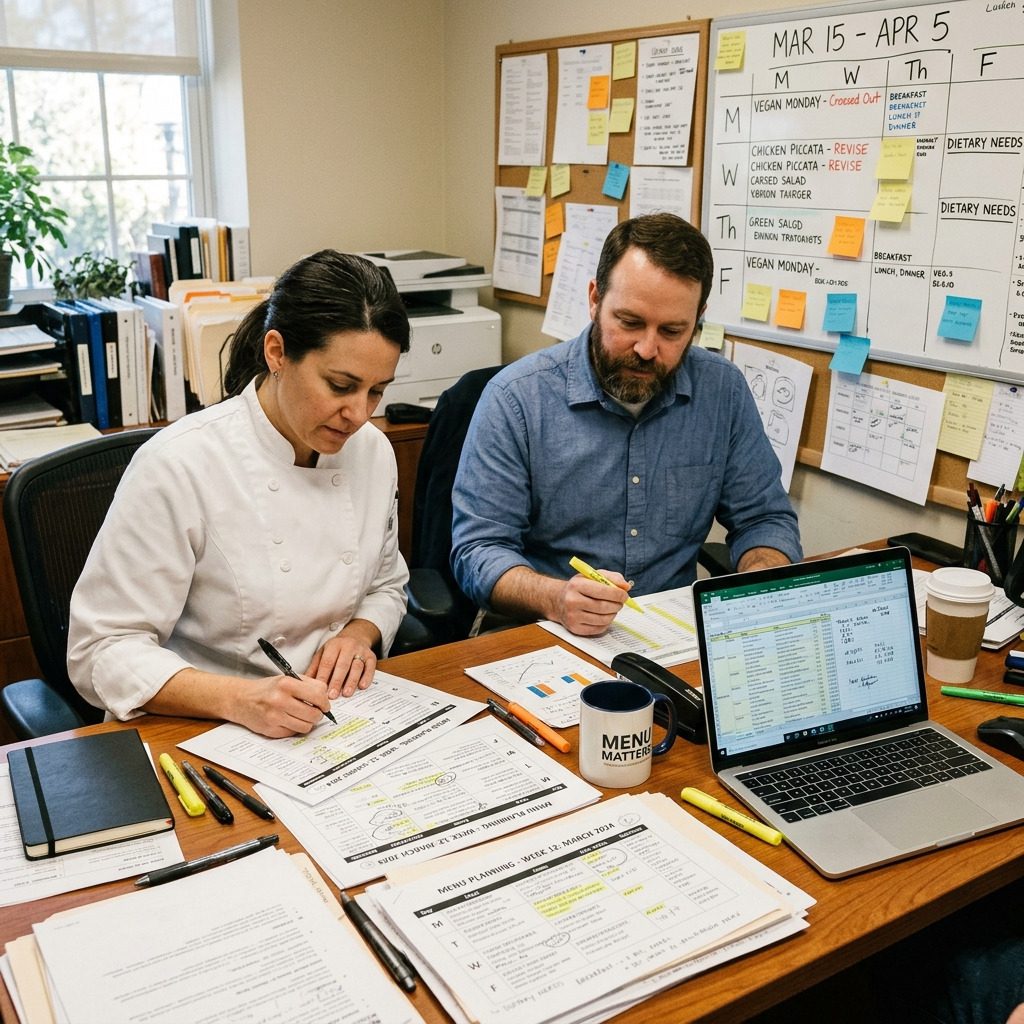
The workforce is internationally diverse. A large construction site in Riyadh might have workers from Saudi Arabia, India, Pakistan, Bangladesh, the Philippines, Egypt, Ethiopia, and a dozen other countries. That’s not a cultural observation — it’s a menu planning requirement. The meal programme needs to accommodate different dietary backgrounds, different spice tolerances, and different expectations of what “lunch” looks like. A single menu designed for one cuisine will leave half the workforce unhappy.
Packaging needs to survive the site. This isn’t a meal being carried from a lobby to a desk. It’s being transported in the bed of a pickup, handled with dirty gloves, and eaten without utensils if the packaging doesn’t include them. The container needs to be leak-proof, sturdy enough to stack without crushing, insulated enough to maintain temperature for at least an hour after delivery, and fully self-contained — meal, utensils, napkin, water, everything in one box.
The food safety challenge that nobody in procurement thinks about
Food safety on construction sites is a different problem than food safety in offices. The environment works against you in every possible way.
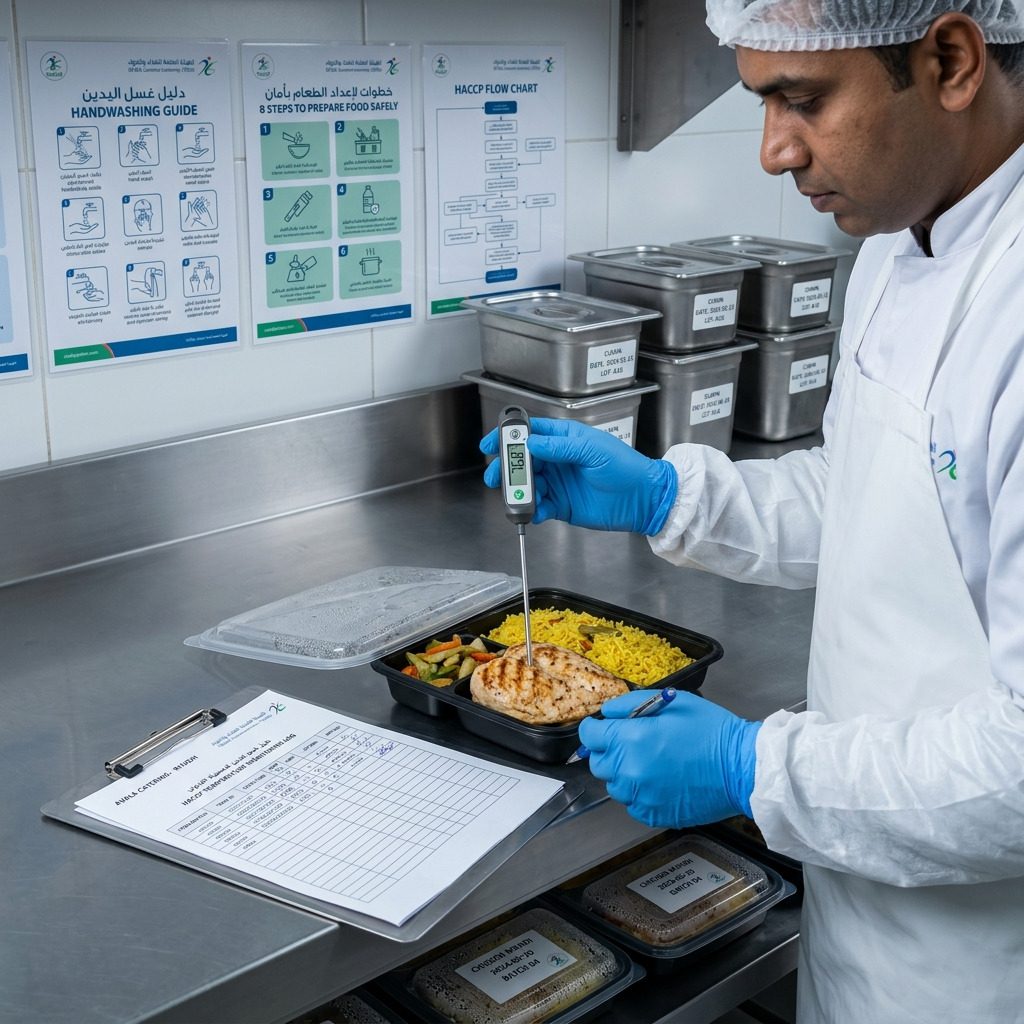
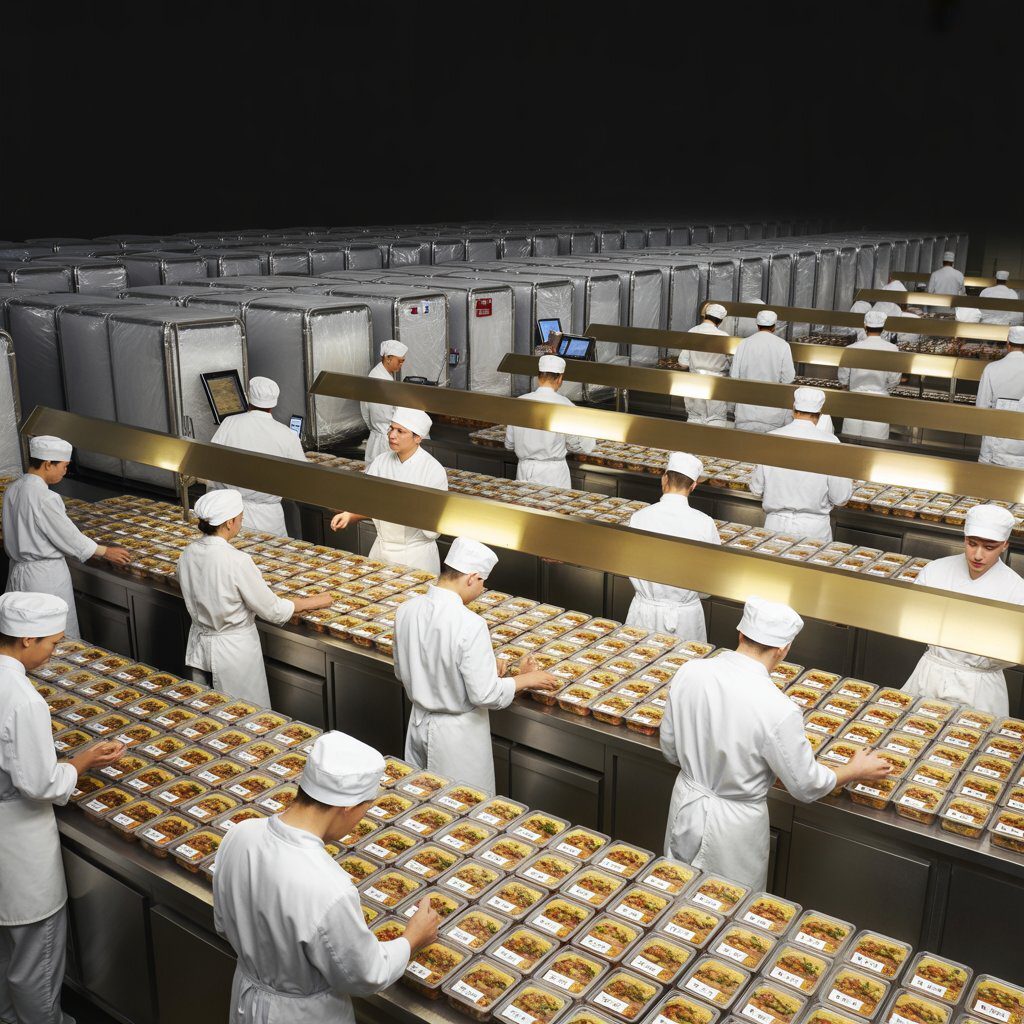
The meal leaves our production facility in sealed, temperature-controlled packaging. It gets loaded into a refrigerated delivery vehicle. It arrives at the site. So far, the cold chain is intact. Then the boxes get unloaded and distributed to wherever workers are eating — which might be 200 metres from the delivery point, carried by hand, in direct sun.
That last stretch — delivery point to mouth — is where the chain breaks if the packaging isn’t designed for it. We use insulated containers with internal temperature retention that keeps hot food above safe temperatures for approximately 90 minutes after leaving the vehicle, even in ambient conditions of 45°C+. That’s tested, not theoretical.
Our SFDA compliance guide covers the broader food safety framework that applies to all catering, but construction site delivery adds specific challenges that office or event catering doesn’t face. The dust alone requires additional packaging integrity that indoor catering doesn’t need to think about.
Delivery logistics on active construction sites
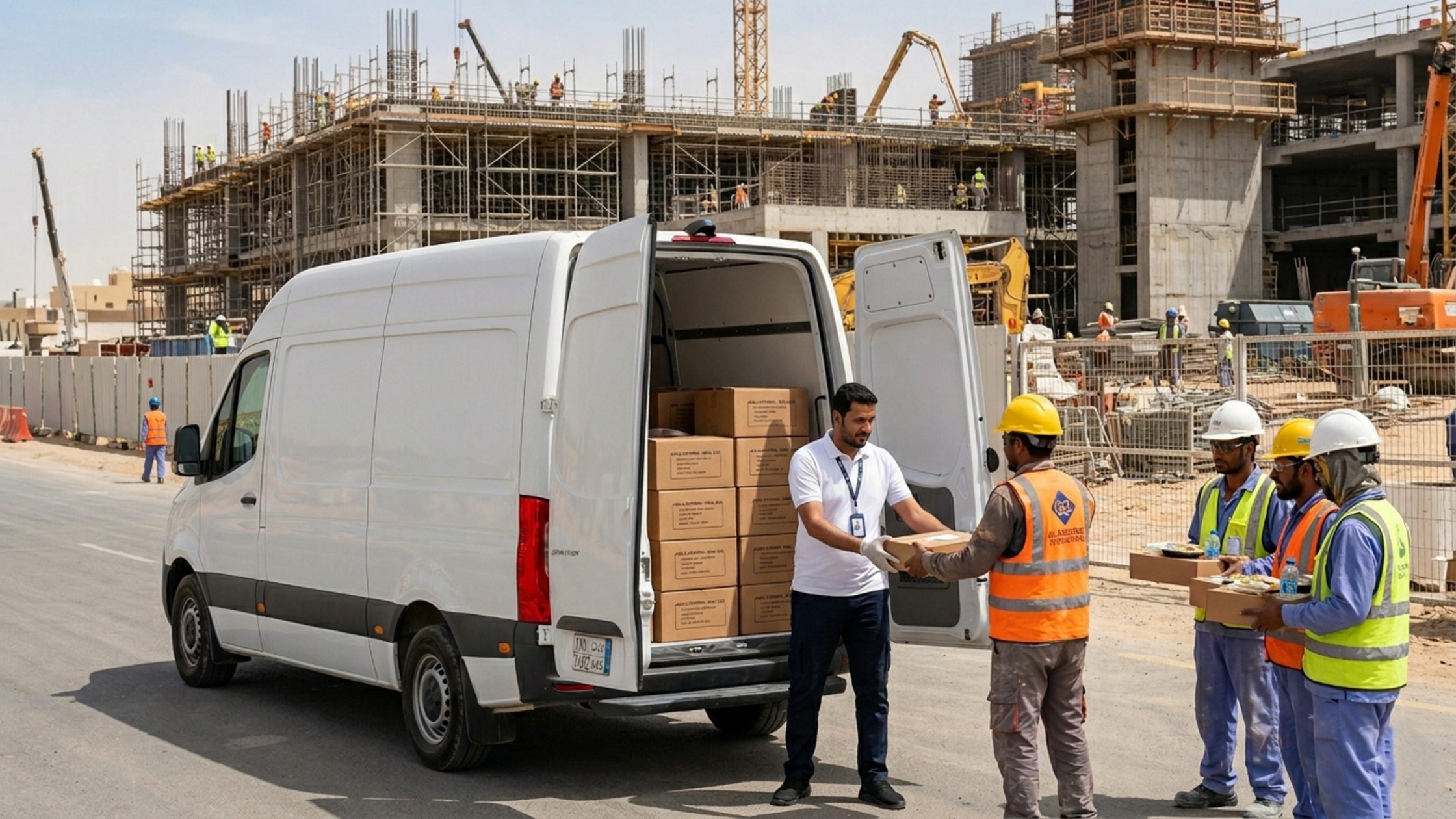
Getting a catering van onto an active construction site is not like pulling up to an office building’s service entrance. Sites have restricted access hours. Heavy equipment has right of way. The access road that worked last Tuesday might be blocked by a crane operation today.
We coordinate delivery schedules with site managers in advance, including backup plans for when the primary access route is blocked. Our drivers who handle construction site deliveries know the protocols — safety vests, hard hats, check-in procedures, designated unloading zones. We’ve had situations where a driver arrived to find the gate completely closed because of a concrete pour, and the backup plan was to reroute to a secondary entrance 400 metres down the perimeter road. That kind of thing happens regularly. You plan for it or you scramble.
For sites outside Riyadh’s main urban area — and there are plenty of construction projects in developing districts and suburban expansion zones — check the caterer’s service area coverage. A provider whose fleet is optimised for central Riyadh office delivery might struggle with a site 40km south on a road with no landmarks. We deliver across the greater Riyadh area, but we’re honest about the sites that push our logistics to the edge.
Contract structures that work for construction projects
Construction projects are inherently variable. The workforce ramps up. Then it ramps down. Then it ramps up again when a new phase starts. A rigid catering contract that locks in a fixed daily headcount doesn’t match the reality of how construction projects operate.
What works better is a short-term or flexible contract that allows weekly headcount adjustments. We’ve run construction site catering contracts that started at 150 meals per day, peaked at 600 during the main build phase, and dropped back to 80 during finishing and handover. That’s a normal trajectory. The contract structure needs to accommodate it without penalising either side.
For longer-duration projects — 12 months or more — a long-term catering contract with built-in flexibility clauses is usually more cost-effective because the per-meal pricing improves with committed volume, even if that volume fluctuates seasonally.
Vision 2030 made this a growth market
NEOM. The Line. Qiddiya. New Murabba. Diriyah Gate. King Salman Park. Riyadh Metro. These mega-projects employ tens of thousands of workers across sites that didn’t exist five years ago. The demand for construction site catering in Riyadh and across Saudi Arabia is at a level we’ve never seen before, and it’s going to stay elevated for the rest of the decade at minimum.
If you’re a project manager, HSE officer, or operations director on a Riyadh construction site, the workforce feeding question isn’t going away. Getting it right — with proper food safety, culturally appropriate menus, packaging that survives the site, and logistics that actually reach your location — is worth solving properly rather than patching together with whatever’s available.
Avala delivers to construction and project sites across greater Riyadh, produced from Leylaty Hospitality Group’s Central Production Unit. 77 years of operations. We’ve been feeding working people in Saudi Arabia since long before Vision 2030. We’ll still be doing it when the projects are finished.
Discuss your site’s catering requirements — headcount, location, and timeline.